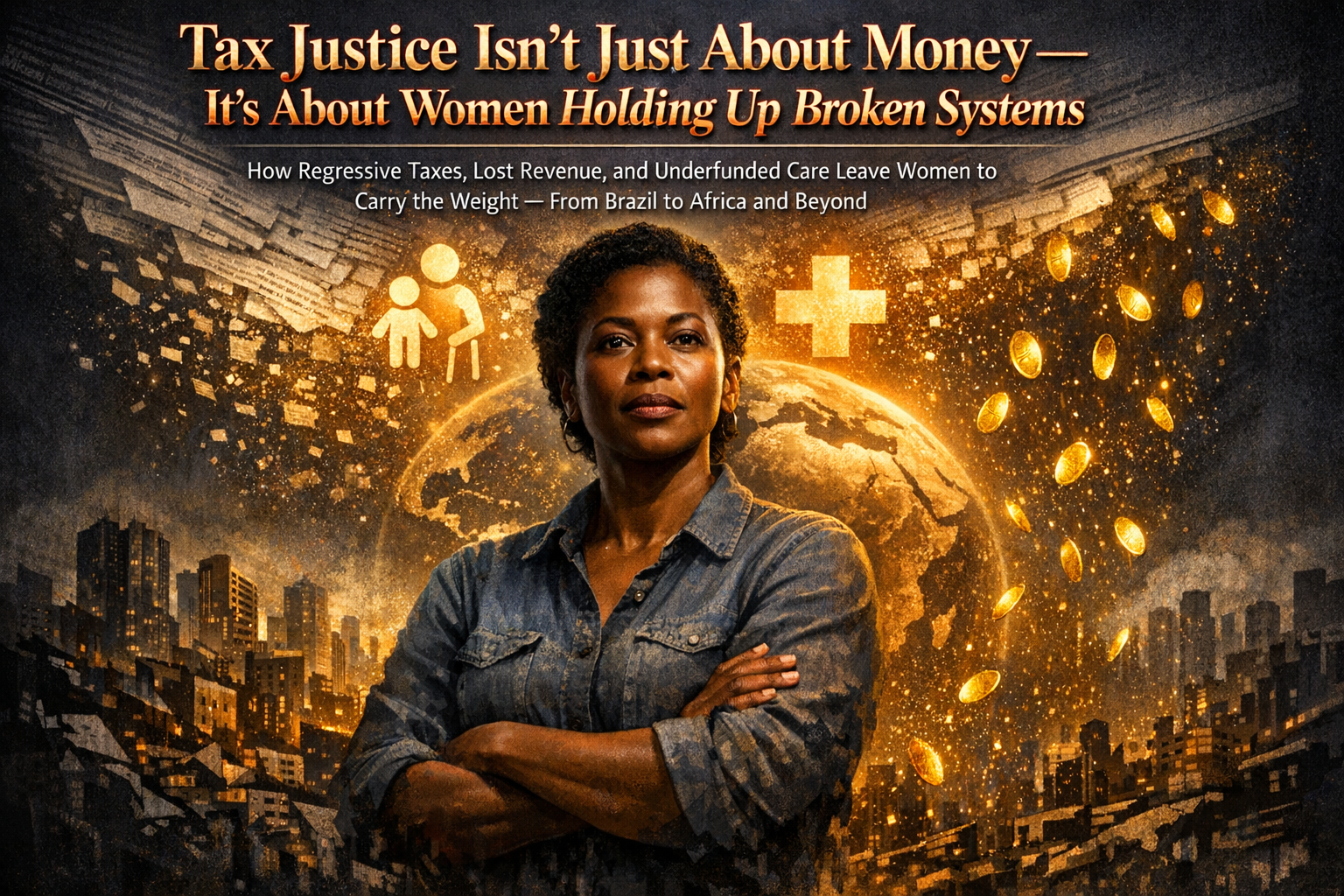
The Invisible Work That Keeps Society Running
You’ve probably seen her — the single mom working two jobs, the grandmother raising grandchildren, the aunt who shows up with meals after a crisis. She’s not a superhero. She’s just doing what the system forces her to: fill the holes left by broken policies, underfunded services, and unfair taxes.
In Brazil, where I grew up, this was the norm. My mother was the first in our family to go to university. She worked long hours, raised us alone, cleaned, cooked, and cared — all while navigating a tax system that took more from her than it gave back. And she wasn’t alone. Across neighborhoods, cities, and countries, women are stepping in where governments have stepped back.
Why Tax Systems Fail Women (And How It’s Not an Accident)
Brazil’s tax structure is one of the most regressive in the world. That means the poorest — often women-led households, especially Black women — pay a higher percentage of their income in taxes than the wealthy do. Indirect taxes like VAT hit essentials: food, medicine, transportation — things women buy for their families every day.
Meanwhile, funding for programs that support women — like shelters for domestic violence survivors — gets slashed. Between 2015 and 2017, Brazil cut funding for violence prevention by nearly half. During the pandemic, when abuse spiked, less than 10% of allocated funds were even spent.
This isn’t mismanagement. It’s policy. Budgets aren’t neutral. They’re choices. And too often, those choices leave women holding the bag — literally and figuratively.
Africa’s Silent Crisis: When Tax Abuse Steals Futures
The same pattern plays out across continents. In our 2025 report Bled Dry, we looked at how tax abuse, illicit financial flows, and debt are crushing public services in African nations. The result? One in five infants miss vaccines. Millions of girls drop out of school before adolescence. And most working women? Trapped in informal jobs with no safety net.
It’s not coincidence. It’s consequence. When corporations and the ultra-rich dodge taxes, governments have less to spend on schools, clinics, and childcare. And who picks up the slack? Women. Again.
Care Is Not a Private Burden — It’s a Public Responsibility
This year’s Global Days of Action on Tax Justice for Women’s Rights has a powerful theme: “Tax Justice for the Human Right to Care.” Because care — whether it’s raising kids, nursing the sick, or supporting elders — shouldn’t be a family secret. It should be a societal investment.
Care requires money. Money requires revenue. Revenue requires fair taxation. Period.
Right now, women are paying twice: once in taxes, and again in unpaid labor. That’s not equality. That’s exploitation disguised as tradition.
The UN Tax Convention: A Once-in-a-Generation Chance
As governments negotiate a new global tax treaty under the UN, this is our moment. For the first time, countries from the Global South are sitting at the table as equals — shaping rules that could finally make multinational corporations and billionaires pay their fair share.
This isn’t just about closing loopholes. It’s about redirecting resources to where they’re needed most: public care systems that lift the burden off women’s shoulders. It’s about making sure that when a mother needs childcare, she doesn’t have to choose between a job and her child’s safety.
International Women’s Day: More Than Celebration — It’s Accountability
Thirty years after the Beijing Declaration, we can’t talk about gender equality without talking about budgets. We can’t demand empowerment while letting tax havens thrive. We can’t call for care without funding it.
Tax justice won’t fix everything. But without it, gender equality remains underfunded, fragile, and forever out of reach.
So this week, as we honor women around the world, let’s also demand better systems. Let’s push for taxes that work for women — in Brazil, across Africa, and everywhere.
Because no woman should have to hold up a broken system alone.
Share:
8 Retirement "Must-Haves" That Could Be Wasting Your Savings
Energy Bills Set to Jump 10% This Summer — Here’s How to Protect Yourself Before It’s Too Late