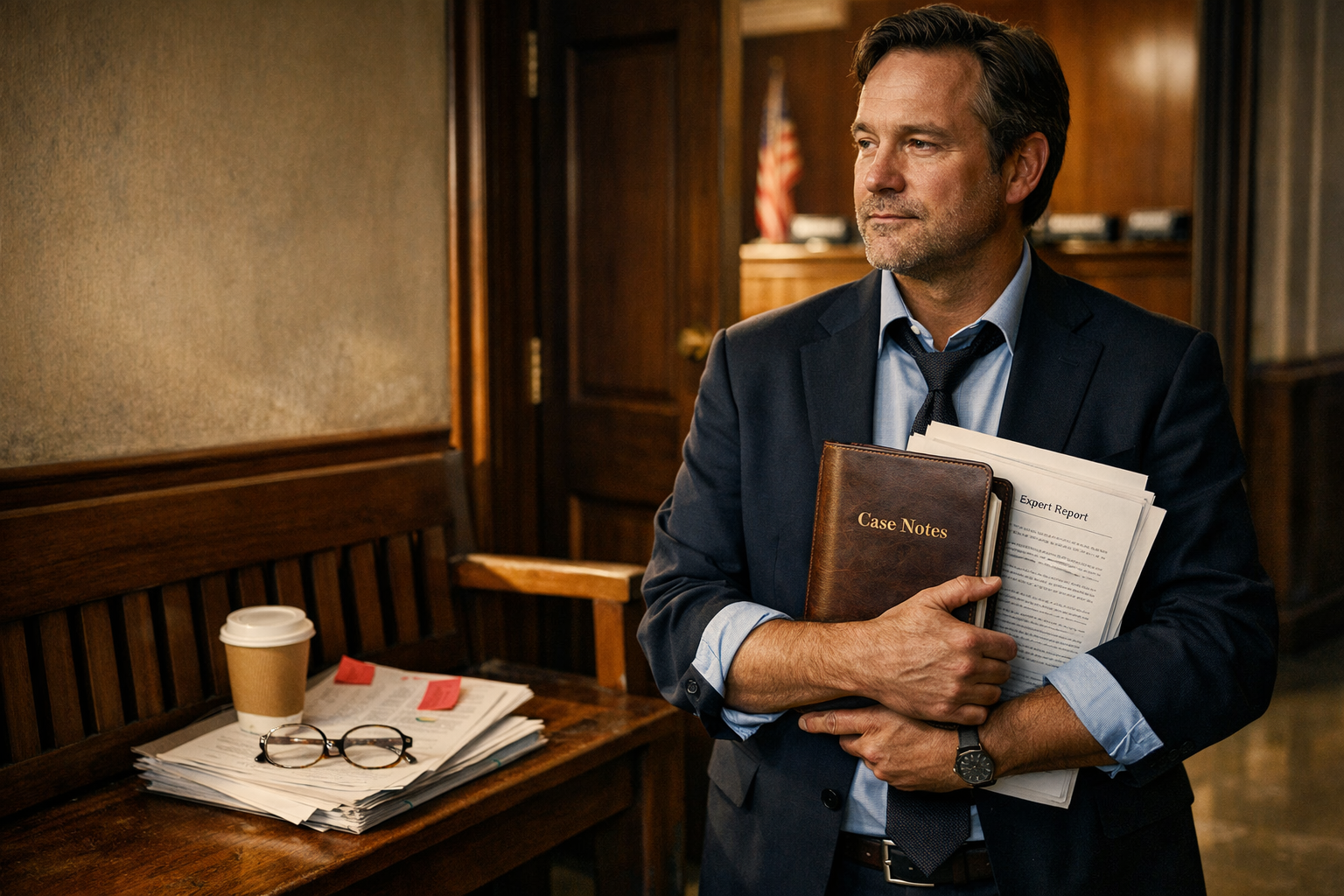
When I first started as a financial expert witness in 2009, I thought the job was straightforward: analyze the numbers, write a report, show up in court, and answer questions. I was naive.
My first major case involved a shareholder dispute at a mid-sized manufacturing company. The plaintiff claimed the CEO had hidden millions in profits. The defendant's attorneys had hired me to review the accounting records and provide an objective analysis. I spent weeks combing through ledgers, bank statements, and internal communications. My conclusion? The numbers didn't add up — but not in the way anyone expected.
When I testified, the opposing counsel spent two hours trying to discredit me. They questioned my methodology, my experience, my objectivity. At one point, they asked if I'd ever been wrong before. I said yes. That single word changed everything. Instead of appearing defensive, I looked credible. The judge later told my attorney that my willingness to acknowledge uncertainty made my testimony more trustworthy than the other expert's.
That case taught me the first rule of expert witness work: credibility beats certainty.

The Cases That Shaped My Practice
Over the years, I've worked on fraud investigations, bankruptcy proceedings, securities litigation, and family law disputes. Each one has taught me something different about how financial analysis intersects with human behavior.
The Ponzi Scheme That Wasn't
I was brought in to analyze a suspected investment fraud. The client had lost $2.3 million with a financial advisor who promised consistent 12% annual returns. On the surface, it looked like a classic Ponzi scheme — new investor money was being used to pay returns to existing investors.
But when I dug deeper, I found something more complicated. The advisor had actually invested the money in legitimate securities — but he'd been front-running trades, taking a hidden 3-4% cut for himself. It wasn't fraud in the traditional sense; it was breach of fiduciary duty. The distinction mattered because it changed the damages calculation and the legal strategy.
My report was 40 pages long, but the key finding fit in two sentences. That's when I learned the second rule: simplicity is power. Judges and juries don't want to wade through financial jargon. They want to understand what happened, why it matters, and what it's worth.
The Divorce That Revealed Hidden Assets
I've worked on dozens of high-net-worth divorces, but one case stands out. A business owner claimed his company was worth $5 million. His ex-spouse's attorney suspected he was hiding value.
I reviewed 10 years of tax returns, bank statements, and business records. What I found was a pattern: the owner was systematically shifting profits into related entities — a consulting firm, a real estate holding company, and a management company. On paper, the main business looked modest. In reality, the owner had created a financial maze.
By tracing the money through each entity, I was able to show that the actual value was closer to $18 million. The case settled before trial, but the lesson stuck with me: follow the money, not the paperwork.

What Attorneys Get Wrong When Hiring an Expert
I've been retained by hundreds of attorneys, and I've noticed patterns in how they approach expert selection. Some of these patterns lead to disaster.
Mistake #1: Hiring for Confirmation, Not Analysis
The worst attorneys come to me with a predetermined conclusion. They want me to "prove" their narrative, not analyze the facts. I've turned down cases because of this. Once, an attorney asked me to review a contract dispute and said, "I know the other side breached — I just need you to quantify the damages."
I asked him to let me review the documents first. After doing so, I found that his client had actually breached the contract first. He didn't hire me. But the attorneys who do hire me — the ones who say, "I think this happened, but I need an objective analysis" — those are the ones who win, even when the facts don't favor them initially. Why? Because judges respect experts who follow the evidence, not their client's wishes.
Mistake #2: Waiting Too Long to Retain an Expert
I’ve had attorneys call me three weeks before trial asking if I can review a complex financial case. The answer is almost always no. Expert analysis takes time — sometimes months. If you wait until the last minute, you're either going to get a rushed, shallow analysis or you're going to lose your expert entirely.
I once worked on a securities fraud case where the attorney didn’t retain me until 10 days before trial. The client had been misled by a broker who promised returns of 15% annually. The broker had used a complex structure involving offshore accounts and derivatives — and the client lost $1.2 million.
By the time I was brought in, the discovery process was already complete. I had to review thousands of pages of documents, trade records, and emails in a fraction of the time I’d need to do a proper analysis. I ended up having to rely on a simplified model — one that didn’t fully capture the nuances of the investment strategy. The judge later noted that my report was “well-reasoned but limited in scope,” and the jury ultimately awarded only 60% of the claimed damages.
The lesson? Retain an expert early — not when the deadline is looming. You don’t want to be in a position where your expert is forced to rush through a case that requires deep financial scrutiny. That’s not just bad practice — it’s a risk to your client’s case.
Mistake #3: Assuming the Expert Will Handle Everything
Another common mistake I see is attorneys who assume that because they’ve hired an expert, the expert will manage the entire financial narrative of the case. That’s not how it works.
Experts are there to provide analysis, not to manage the legal strategy. I’ve seen attorneys hand me a spreadsheet with $5 million in “damages” and say, “Just make it look good.” I can’t do that. I can’t fabricate a calculation or misrepresent a number — even if the attorney thinks it will help their case.
I’ve had to push back on attorneys who wanted me to use a method I knew was inappropriate. In one case, a lawyer asked me to use a “discounted cash flow” model to value a business, even though the business had no future cash flow — it was a single-asset operation with no growth potential. I told him I couldn’t do that. He didn’t like it. But in the end, the judge ruled in favor of my methodology — and the client won.
Mistake #4: Not Preparing the Expert for Cross-Examination
I’ve seen experts get destroyed on the stand — not because they were wrong, but because they weren’t prepared. One of the most common questions I get is: “Can you explain this in plain English?”
That’s not a trick question. It’s a test of your ability to communicate. If you can’t explain your analysis in simple terms — without jargon — you’re not doing your job.
I once testified in a business valuation case where the opposing expert used a term called “terminal value.” I explained it as “the estimated value of the business at the end of the forecast period.” The opposing counsel asked me to define it again. I did. Then he asked me to explain it a third time — in one sentence. I said, “It’s what the business is worth when we stop forecasting.” He nodded. The jury didn’t need to understand the math — they just needed to understand the concept.

What Makes a Good Financial Expert Witness?
After 15 years, I’ve learned that the best expert witnesses aren’t the ones with the highest degrees or the most certifications. They’re the ones who:
- Stay humble — even when they’re right, they don’t act like they’re the only one who can understand the numbers.
- Stay focused on the facts — not the outcome.
- Are transparent about their limitations — if they don’t know something, they say so.
- Can explain complex concepts in simple terms — because the judge, the jury, and even the opposing counsel may not be financial experts.
I’ve also learned that the best experts are the ones who work with attorneys — not just for them. I don’t just send a report. I meet with the attorney before trial. I go over the key findings. I help them understand the numbers so they can ask the right questions during cross-examination.
And I always leave room for the other side to challenge me. Because if I don’t, the judge will wonder why I’m so confident — and that can hurt my credibility.
Final Thoughts
Being a financial expert witness is not about being the smartest person in the room. It’s about being the most reliable. It’s about staying grounded, staying honest, and staying focused on the facts — even when the pressure is high.
If you’re an attorney, remember: you’re not hiring an expert to confirm your beliefs. You’re hiring one to help you understand the truth — no matter what that truth is.
And if you’re a business owner or investor, know that even in the most complex financial disputes, the truth can be found — if you have the right person helping you uncover it.
This blog post was written by a financial expert witness with over 15 years of courtroom experience. The views expressed are based on real cases and observations from the legal and financial fields. For more information on expert witness services, visit the provider’s website.
Share:
I Represented a Cat in Court”: 12 Real Employment Law Cases That Sound Like Fiction (But Aren’t)